
Investors who decide to enter medium to long-duration funds should be cognisant of the risk.

During 2023, the Indian real estate sector - both housing and commercial - witnessed buoyancy fuelled by demand, supply, and absorption, and the sector is banking on the upcoming Budget to keep the momentum going. Mumbai-based Sattva Group wants the government to focus on the critical pillars for long-term growth. The company emphasised on the infrastructure boom with increased allocation, lower goods and services tax (GST) rates, incentives for affordable housing and single-window clearance to fast-track projects and support liquidity.

All six members of the Reserve Bank of India's (RBI's) monetary policy committee (MPC) expressed caution over food inflation during the December review, while two external members warned about high real interest rates as headline inflation approaches its target of 4 per cent. The central bank continued to maintain the status quo on both the repo rate and the stance in the December monetary policy. India's retail inflation in November rose to 5.5 per cent - its fastest pace in three months - due to higher food prices.

Housing sales rose 36 per cent year-on-year to a record 120,280 units across seven major cities during the July-September period on robust demand amid stable mortgage rate, according to Anarock. Housing sales stood at 88,230 units in the year-ago period across the seven major cities. Releasing the data, real estate consultant Anarock said average housing prices across the seven cities grew 11 per cent annually in the July-September period this year.

'We have a plan to plough back a 'This year in the first half we had profits of more than Rs 31,000 crore.' significant amount of profits this financial year.' 'We have seen this organic plough back of profit is one of best ways to support the equity of the bank.'

In a tightening cycle, a premature pause in monetary policy action would be a costly policy error, Reserve Bank Governor Shaktikanta Das opined while voting along with five other members of the MPC for raising the key lending rate by 35 basis points earlier this month, according to the minutes of the meeting released on Wednesday. Prior to the December hike in repo rate, the RBI had raised the key short-term lending rate by 190 bps in four tranche.

The returns from liquid funds, currently, look better than what savings accounts of leading banks are offering, points out Sarbajeet K Sen.

'If rate cuts happen, bond yields will come down and investors will make mark-to-market capital gains on them.'

Floating-rate mutual funds are back in demand after a year-long period of consistent outflows. In the past three months, investors have poured over Rs 6,100 crore into these debt schemes, indicating a reversal in fortunes for the category that recorded outflows for 11 consecutive months (May 2022 to March 2023), totalling Rs 32,250 crore. Floating-rate funds invest at least 65 per cent in floating-rate instruments, which have their interest rates linked to the Reserve Bank of India repo rate.

'When you need to revive the economy, when you need to revive aggregate demand, you cut taxes.' 'But what's this government doing?' 'It's increasing taxes for the middle class and the vast majority of the poor on fuel, which has a ratchet effect on most other products.'

The Reserve Bank on Friday took steps towards normalisation of liquidity management to pre-pandemic levels, with the introduction of the standing deposit facility (SDF) as the basic tool to absorb excess liquidity, and narrowing the liquidity adjustment facility (LAF) to 0.50 per cent from the 0.90 per cent. Governor Shaktikanta Das said the SDF will be at 3.75 per cent, 0.25 per cent below the repo rate and 0.50 per cent lower than the marginal standing facility (MSF) which helps the banks with funds when required. The SDF has its origins in a 2018 amendment to the RBI Act and is an additional tool for absorbing liquidity without any collateral.

The Reserve Bank of India (RBI) on Wednesday raised the benchmark lending rate by 35 basis points to 6.25 per cent in a bid to tame inflation, which has remained above its tolerance level for the past 11 months. With the latest hike, the repo rate or the short-term lending rate at which banks borrow from the central bank now has crossed 6 per cent. This is the fifth consecutive rate hike after a 40 basis points increase in May and 50 basis points hike each in June, August and September.

'Comparing the rates of interest with PSU banks, the three- and five-year time deposit rates of the post office are more favourable.'

The Reserve Bank's rate-setting panel will start its 3-day deliberations on Wednesday amid expectations of yet another rate hike of 50 basis points to check high inflation, in line with similar actions taken by other major central banks, including the US Fed. Based on the recommendations of the Monetary Policy Committee (MPC), the RBI had effected 50 basis points increase in repo rate each in June and August after raising the short-term lending rate by 40 basis points in an off-cycle decision in May. The MPC, headed by RBI Governor Shaktikanta Das, is scheduled to meet during September 28-30.

The unexpected interest rate hike by the RBI on Wednesday will have the banking system on average making a 10-15 bps gains on the yields, with private banks making larger gains as 57 per cent of their loans are linked to external benchmark rate and 40 per cent to the marginal cost of lending rates, as per a report. Stating that lenders and borrowers will face volatile times with the Reserve Bank raising the repo rate by 40 bps to 4.40 per cent and the cash reserve ratio (CRR) by 50 bps on May 4 in an off-cycle policy move, India Ratings said the market rates had already been moving higher before the move. The 364-day T-bills have moved up 120 bps and 10-year G-sec by 140 bps since May 2020, when the repo rate was cut to a record 4 per cent, which led to an expectation of a faster and sharper rise in interest rates in the system but the central bank stayed the course to support the fragile economy battered by the pandemic.

The banking system neared Rs 1.47 trillion of liquidity deficit on Monday, the highest since January 29, 2020, when the banking system liquidity deficit went up to Rs 3 trillion. The Reserve Bank of India (RBI) injected Rs 1.47 trillion on Monday and Rs 1.46 trillion on Tuesday. Market participants say that the disbursement of Rs 25,000 crore as the second tranche of incremental cash reserve ratio (I-CRR) will not be enough, and the liquidity might tighten further to Rs 2 trillion in short term due to tax outflows and arrival of the festival season.

If you don't have a specific goal, but want intermittent liquidity, then ladder your FDs, that is, invest in FDs of varying maturities, such as one, two, three, five or even 10 years. Laddering ensures FDs mature at regular intervals.

The July-September quarter GDP numbers are due on November 30.

The RBI's rate-setting panel MPC on Monday began its three-day deliberation amid expectations of another round of hike in benchmark interest rates to contain inflation that continues to remain above the central bank's upper tolerance level. RBI Governor Shaktikanta Das will announce the decision of the Monetary Policy Committee after deliberations on Wednesday. Das has already indicated that there may another hike in the repo rate, though he refrained from quantifying it.

Indian Bank expects recoveries to be more than slippages in this financial year, which will result in improved asset quality.
Days after the US Fed raised the interest rate, the RBI may go in for its third consecutive policy rate hike by at least 35 basis points to check high retail inflation, experts said. The central bank has already announced to gradually withdraw its accommodative monetary policy stance. The Reserve Bank of India's rate-setting panel -- the Monetary Policy Committee -- will meet for three days from August 3 to deliberate on the prevailing economic situation and announce its bi-monthly review on Friday.

The bulk of an investor's portfolio should be in shorter-duration funds of up to one year portfolio duration.
Key lending rate (repo) raised by 50 basis points to 4.9 per cent; 2nd increase in 5 weeks
The Reserve Bank of India (RBI) will stay away from changing key rates - including the reverse repo rate - this fiscal in the backdrop of Omicron. However, it will continue to shape the rate movements through liquidity market operations. Soumya Kanti Ghosh, group chief economic advisor, State Bank of India, said whether Omicron surge or not, there is not going to be any hike this year. However, the central bank may continue to shape rates through market operations.

Improved credit profile may make you eligible to transfer your existing home loan to another lender at a much lower rate.

'They can transition from short to long-duration funds when the yield curve normalises.'

Market participants attribute the stability to the Reserve Bank of India's timely intervention in the foreign exchange market, both in terms of selling and buying dollars.

'Look not just at the interest rate but also the processing fee.'

The Reserve Bank may be hitting the end of its tolerance for high inflation and will most likely hike interest rates in the first half of 2022, analysts said on Friday. The central bank will also start rolling back its accommodative policies which have led to easy liquidity conditions, they said. The view from analysts came even as inflation cooled down to 5.6 per cent for July, after two months of breaching the upper end of the RBI's tolerance band of 6 per cent.

Whether this remains under control in the coming months will depend on the future intensity and spread of the Russia-Ukraine war, and the effectiveness of the Indian government's response, points out A K Bhattacharya.
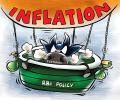
The RBI's Monetary Policy Committee brainstormed the impact of any future shocks on the inflation trajectory and stressed monitoring the cumulative effect of monetary policy actions over the past one year, which is still unfolding, revealed minutes of the rate-setting panel released on Thursday. The minutes of the meeting of the Monetary Policy Committee (MPC), headed by Reserve Bank Governor Shaktikanta Das, also indicated it would be premature to declare an end to the monetary tightening cycle, which started in May 2022 to check high inflation following the outbreak of the Russia-Ukraine war. The central bank, which effected six back-to-back hikes in the key short-term lending rate (repo) since May 2022 to check high inflation, decided to take a pause early this month.

India decisively withstood global headwinds in 2023 and is likely to remain as the world's fastest-growing major economy on the back of growing demand, moderate inflation, stable interest rate regime and robust foreign exchange reserves. Despite widespread pessimism witnessed among the developed nations and the worsening geopolitical situation, India recorded a gross domestic product (GDP) expansion of 6.1 per cent in the March quarter. The growth moved up to 7.8 per cent in the June quarter and was 7.6 per cent in the September quarter. For the first six months of this fiscal, the growth was 7.7 per cent.

State Bank of India (SBI) on Monday raised its benchmark lending rates by up to 50 basis points (or 0.5 per cent), a move that will lead to an increase in EMIs for borrowers. The increase in lending rate comes days after the Reserve Bank of India hiked its benchmark lending rate by 50 basis points to tame inflation. External Benchmark based Lending Rate (EBLR) and Repo-Linked Lending Rate (RLLR) have been raised by 50 basis points while the hike in Marginal Cost of funds-based Lending Rate (MCLR) is 20 basis points across all tenure.

Reserve Bank Governor Shaktikanta Das on Wednesday said the decision to tweak policy rates was not in his hand as he himself is driven by the situation on the ground. In April, the Reserve Bank in a surprise move hit the pause button and decided to keep the key benchmark policy rate at 6.5 per cent. Prior to it, the Reserve Bank of India (RBI) was on a rate hiking spree, raising the repo rate by 250 basis points since May 2022.
The RBI on Friday said maiden Sovereign Green Bonds (SGrBs) would be issued in two tranches for an aggregate amount of Rs 16,000 crore, and proceeds will be utilised for funding public sector projects seeking to reduce carbon emissions. The first auction would be done on January 25 while the second on February 9, the Reserve Bank of India (RBI) said in a statement. The proceeds will be deployed in public sector projects, which help in reducing the carbon intensity of the economy, it said.

'People know if inflation is not within the tolerance band, then action will be taken so they do not expect inflation to rise above that.'

India's services sector activity eased in August but growth rates for new orders remain elevated, as services firms indicated the sharpest upturn in new export business which acted as a catalyst for firms to expand their workforces as well as output, a monthly survey said on Tuesday. Despite falling from 62.3 in July to 60.1 in August, the seasonally adjusted S&P Global India Services PMI Business Activity Index indicated one of the strongest increases in output seen since mid-2010. For the 25th straight month, the headline figure was above the neutral 50 threshold.

RBI Governor Shaktikanta Das kept the red flag on cryptocurrencies flying, warning that the next financial crisis can be triggered by private cryptocurrencies if such speculative instruments are allowed to grow.

The highlights of the RBI's fourth monetary policy review of fiscal year 2022-23 announced by Governor Shaktikanta Das.
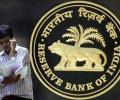
Most members of the monetary policy committee (MPC) argued for front-loading interest rate hikes in view of rapidly rising inflation during the off-cycle monetary policy review earlier this month - the minutes of the meeting published on Wednesday showed. In early May, the rate setting committee met unscheduled and unanimously decided to hike the repo rate by 40 bps. This was the first repo rate hike in four years, and an inter-meeting hike in more than a decade.
